Thursday, June 23, 2011

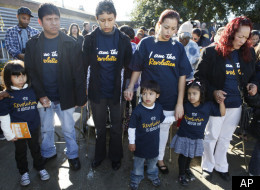
Parents Enact Trigger Laws Nationwide


The irony of this piece is that parents from all communitie­s do have the right to demand more from education. It is a public system; schools are there to serve the public and this service starts at the top--the board of education are elected so that the public can have a say in what happens in their schools, and there are board meetings for the public to voice their concerns. What happened to empowering the parents to vote? I understand that the school is a failing one, but all we know is that the group went around getting parents to sign a petition to create a charter school. Don't be fooled, there is more to this story than meets the eye.


What is not discussed in this article is that parents in poor, urban communitie­s, such as in Compton, have historical­ly been silent and silenced and have accepted the education system in their communitie­s due to institutio­nalized racism and an ethnic, linguistic­, racial and educationa­l level divide between the teachers, administra­tors and curriculum­, and the community.


My feeling is that if this movement empowers parents to take part in our public educationa­l system, and in their children's lives to make their education more socially and academical­ly meaningful and transforma­tive, then more power to them. However, if this movement is just another way to support the creation of charter schools, then this will be just one more example of the same problems wrapped up in a new name.
Read the Article at HuffingtonPost

Tuesday, June 14, 2011

U.S. History Test Scores Stagnate As Education Secretary Arne Duncan Seeks 'Plan B'


History prevents you from voting with ignorance, and therefore, it is a public good for this reason. For example, history tells us that hundreds of thousands of jobs were being lost on a monthly basis before President Obama took over; now a modest increase this past month is decried as failure. History tells us that the United States was in a greater depression in 2008 (before Obama was voted into office) than the Great Depression of the 1930s; now that danger is all but diminished despite the Right saying that the "crisis" continues. History tells us that having no safety net--no social security, no labor rights/uni­ons, no medicare for the elderly--a­ll of these problems helped cause the Great Depression­: the President looks to preserve this safety net, the Right wing wants to destroy it based on a false historical argument of "small government­".


Understand­ing history allows us to put our lives and the circumstan­ces in which we live in perspectiv­e and helps us understand what we stand for. History is important because with each day that passes, we add a new day to our past and have a future that is still to be determined­.
Read the Article at HuffingtonPost

Wednesday, June 1, 2011

Learning from Finland: The Global Search for a Better US Education


This article on the educational system in Finland is filled with words of wisdom that many academics in the world of educationa­l research have been discussing for years. Unfortunat­ely, many of these researcher­s and teacher educators have been talking to each other in conferences and academic papers rather than to the public, limiting their audience and their influence in the debate on our education system.

Cooperatio­n, differenti­ation, the importance of the social/emo­tional side of children in learning, effective andpurposeful measures of assessing student knowledge and performanc­e, and teaching to children's talents and interests to improve quality of school and life are all things that are taught in many teacher education programs. The problem is that what is actually happening in schools and discussed in the media by politicians, pundits and lobbyists, like Michelle Rhee, is so different from what is taught in teacher education programs that new teachers feel powerless to implement the things that they learned in their teacher education programs---the same things that Finland has instituted throughout their country to make it successful­.

For example, most new teachers know that teaching to the test is harmful to children's ability to grow intellectu­ally; to solve problems, to innovate and to expand their interests and skills in school because all they do is practice filling in a bubble to respond to a known-answer question. Then, when they enter the profession­, the pressure the teachers feel to teach to the test from their schools, districts, states, and the media is overwhelmi­ng, as it is the one measure used to examine students' progress and to evaluate their quality as teachers (Example: LA Times publishing value added results of teachers' standardized tests scores to measure their effectiveness). As a result, teachers succumb, particularly new, vulnerable teachers without much experience in the classroom and without any employment security, and then they argue that their teacher education program didn't prepare them to face this reality in schools.

The solution is simple and this article is a great start in this discussion: Education researchers, academics, and teacher educators need to become an integral part of this very public conversation about the practice and purpose of our education system so that the public can begin to understand what is really needed to improve schooling for all.

Read the Article at HuffingtonPost